
Sitemap
A list of all the posts and pages found on the site. For you robots out there, there is an XML version available for digesting as well.
Pages
Posts
Feeling ML FOMO? When (and How) to Explore Machine Learning for Your Research
Published:
Ever look around your lab or department and feel like maybe you’re the last dinosaur? It seems like everyone is talking about Machine Learning (ML), applying it to their data, and getting fascinating results. The buzz is undeniable! And if you’re anything like me, you might start wondering - “Should I be using ML? How do I even get started without an extensive background in it?” Read more
That Feeling Like You’re a Fraud? Let’s Talk Imposter Syndrome
Published:
Ever have that nagging feeling? The one that whispers you don’t really belong here? That any minute now, someone’s going to tap you on the shoulder and say, “We figured it out, you’ve just been lucky/blagging it all along”? Maybe you got good results, passed an exam, or even finished your PhD (hello!), but deep down, you feel like a fraud just waiting to be exposed. Read more
Sharing Your Science: Simple Tips for Presenting Your Research (Without Panicking!)
Published:
So you’ve done the research, maybe even started writing it up… now comes the part where you have to actually talk about it in front of other people. Cue the sweaty palms and racing heart, right? Whether it’s a casual lab meeting update, a formal conference talk, or standing by a poster hoping someone stops by, presenting your work can feel pretty nerve-wracking. Read more
AI and Your Research: Making the Most of New Tools (Ethically!)
Published:
You can’t really escape it these days, can you? Artificial Intelligence, or AI, seems to be popping up everywhere, and academia is no exception. Maybe you’re excited about the possibilities, maybe you’re a bit skeptical, or maybe, like me when I first started seeing it everywhere, you’re just trying to figure out what it actually means for your day-to-day research life. Read more
Writing Your First Research Paper: Tips for Getting Started
Published:
Today, let’s talk about something that often feels like the Mount Everest of early research life - writing your very first academic paper. If you’re feeling intimidated, overwhelmed, or just don’t know where to start – trust me, you’re not alone! I remember staring at my results and wondering how on earth I was going to turn that into something resembling a real publication. Read more
Reading Research Papers: The Deep Dive vs. The Fast Track
Published:
Let’s talk about something fundamental to research - reading papers. Lots and lots of papers. When I first started, I remember feeling totally overwhelmed. How was I supposed to read all of this stuff? And actually understand it? Read more
A Beginner Guide to Research: Thoughts from a Recent PhD Grad
Published:
So, I just finished my PhD. Feels a bit surreal! And maybe a little weird to be writing a “guide” when I feel like I’ve only just figured some things out myself. But maybe that’s the best time to share – while it’s all still fresh. These are just a few thoughts, things I learned along the way, often the hard way. Hope they help you as you start your own research journey. Read more
portfolio
3MT Finalist at IEEE ICC 2023, Rome, Italy
Finalist in the Three Minute Thesis (3MT) competition at the IEEE ICC 2023 conference in Rome, Italy… Read more

AI Training Webinar Series
Hosted an AI training webinar series with 100+ participants, covering AI awareness and hands-on training. Read more
Panelist at APTOM Event
Panelist at APTOM event discussing AI in the professional world: opportunities and challenges. Read more
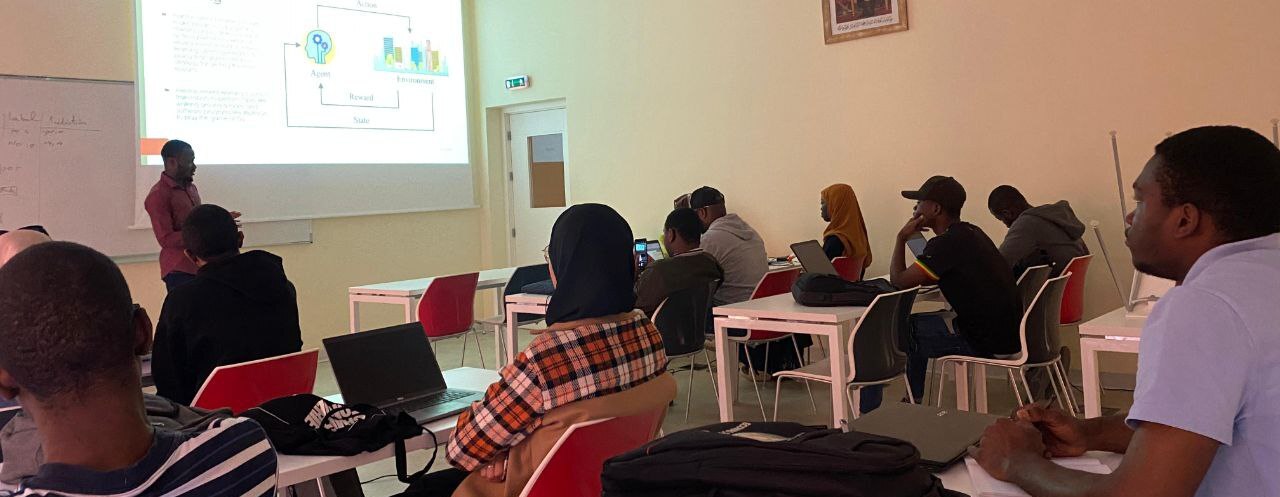
In-Person ML Class for UM6P’s International Student Community
Conducted a machine learning class for the international student community at UM6P. Read more
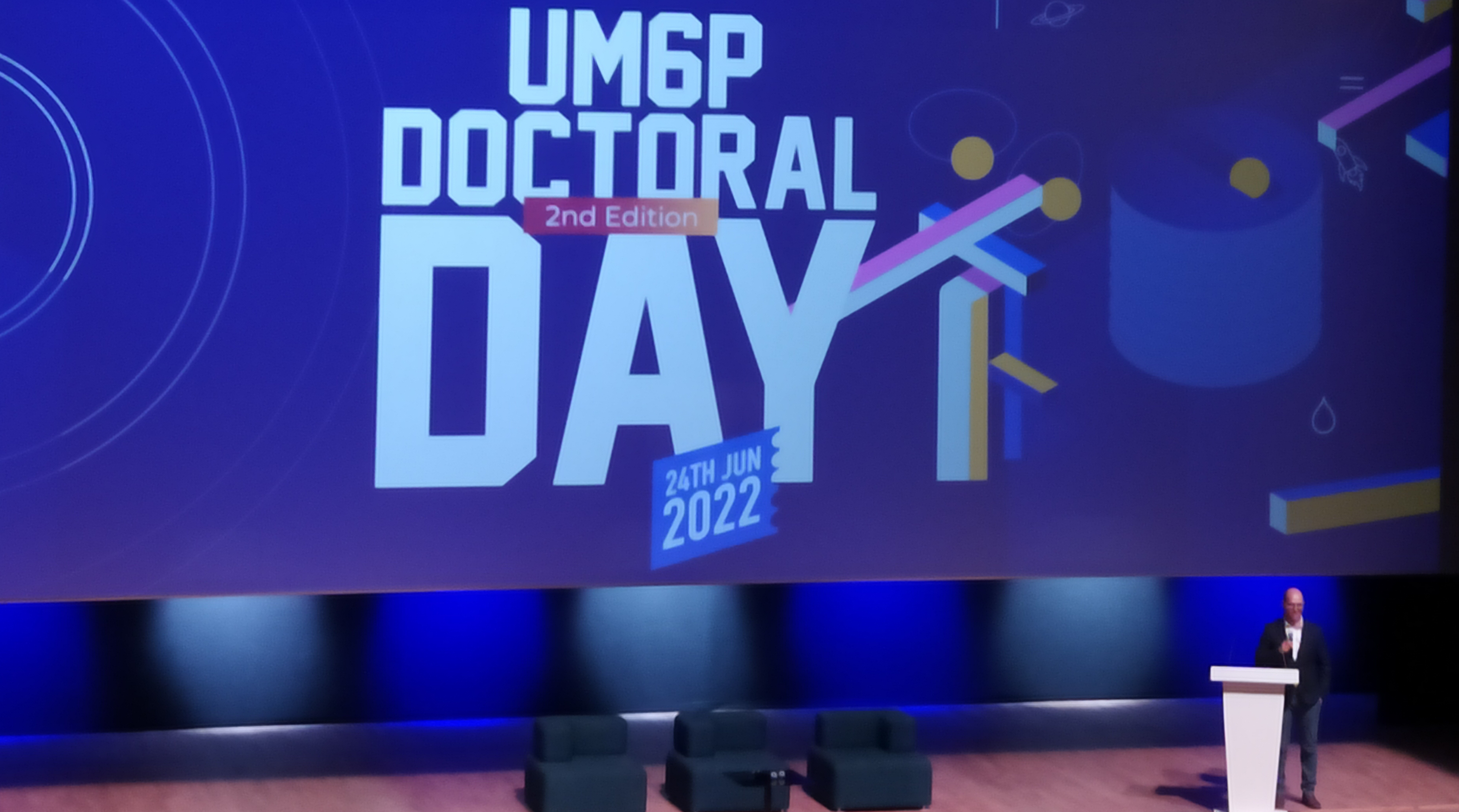
Doctoral Days at UM6P, Benguerir, Morocco
Best Oral Presenter at UM6P Doctoral Days… Read more
MOMI Event at Inria, Université Côte d’Azur, France
Awarded A Best Poster Presentation at MOMI Event organized at Inria… Read more

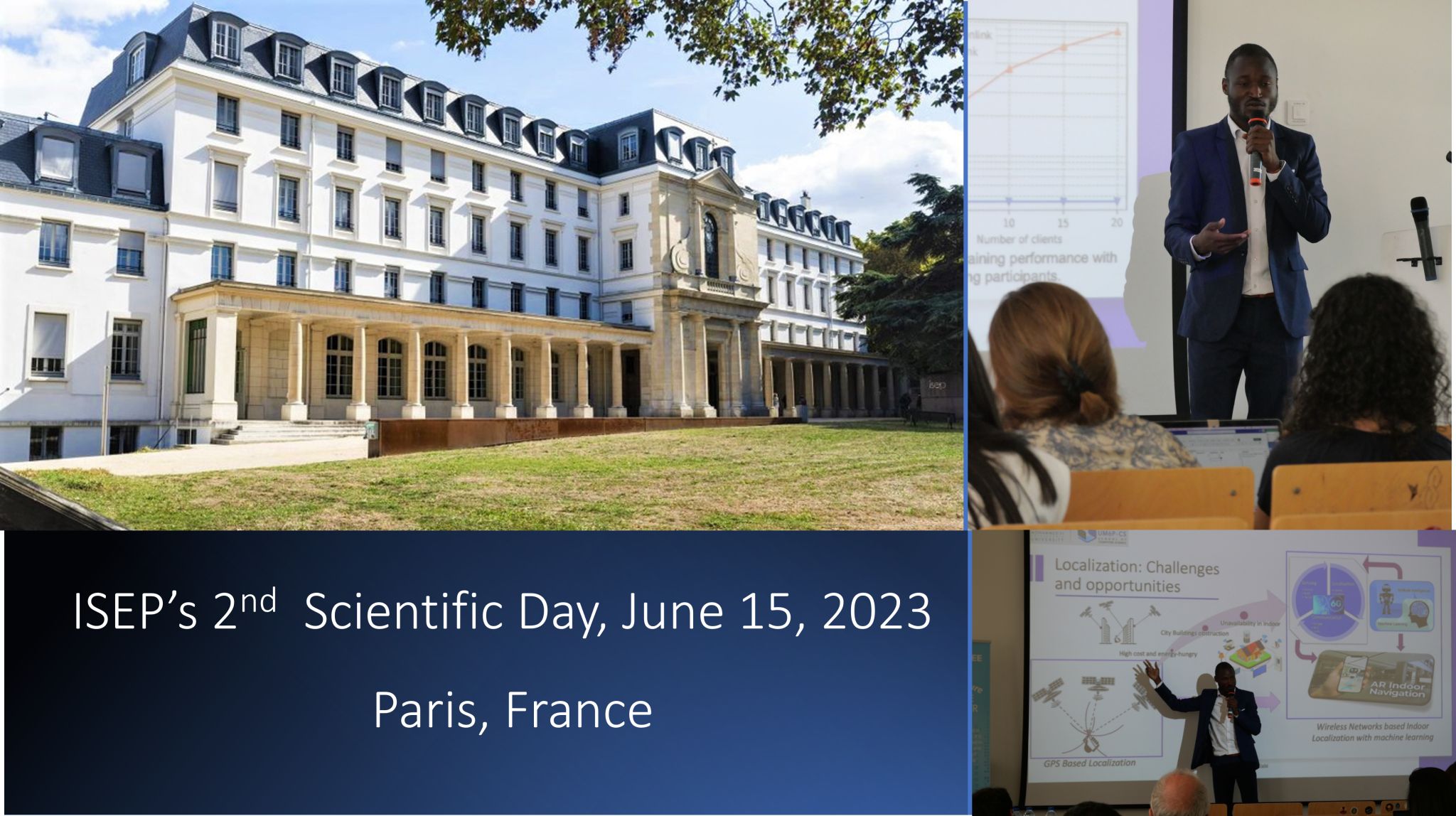
Scientific Day at ISEP, Paris, France
A talk on Indoor Localization in IoT Networks presented at ISEP… Read more
Semi-Marathon Participation
Participated in two 21km semi-marathons, highlighting endurance and discipline. Read more

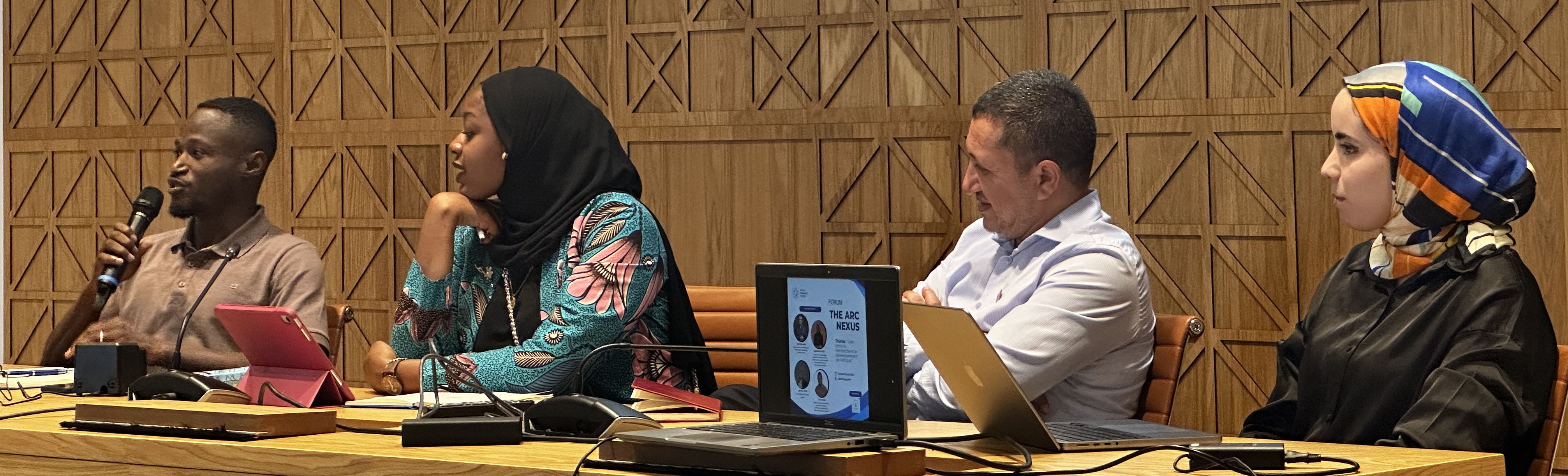
Panelist at THE ARC NEXUS Forum
Discussing the link between research and development in Africa as a panelist at THE ARC NEXUS Forum… Read more
Reviewer and TPC Member for IEEE Conferences and Journals
Reviewer and TPC Member for many IEEE conferences and journals. Read more
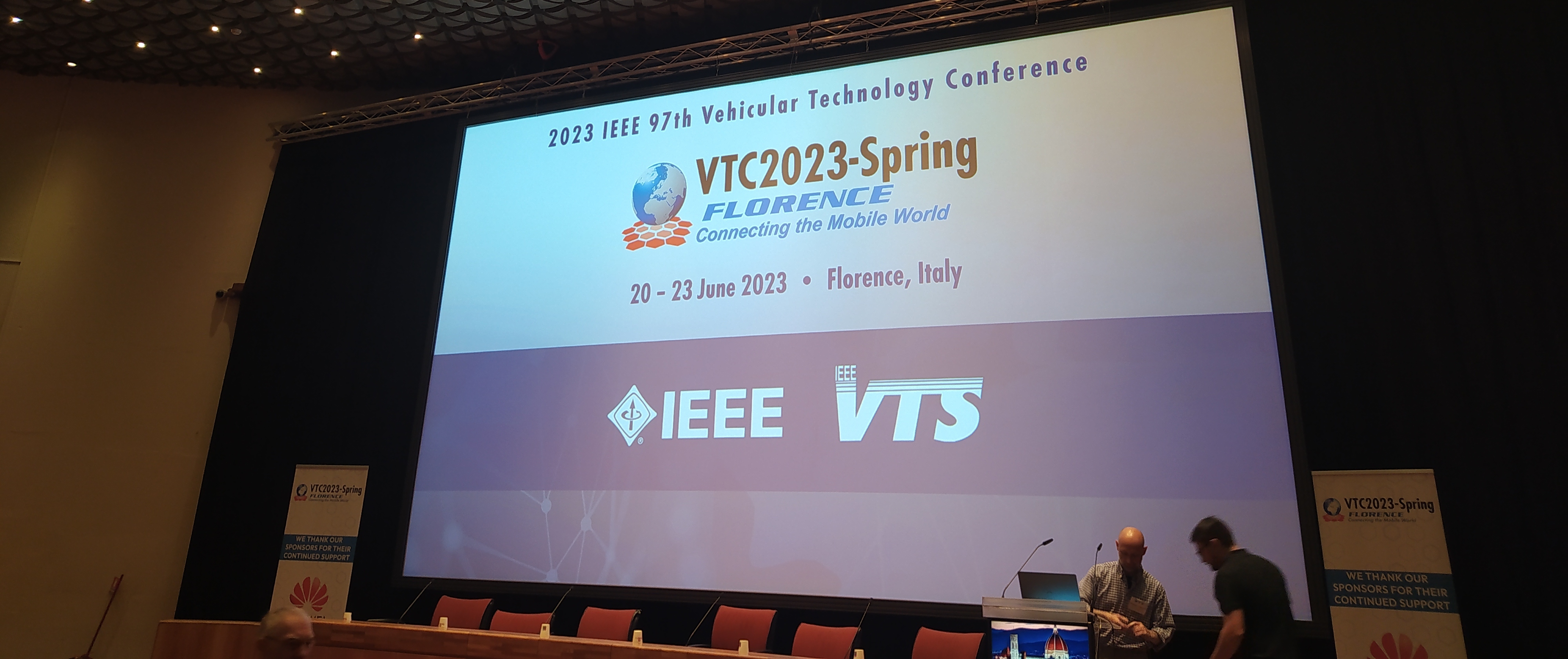
Presenting Author at 2023 IEEE VTC, Florence
Presented research on Deep Reinforcement Learning for LoRa Localization at the 2023 IEEE VTC in Florence, Italy. Read more
publications
A distributed and collaborative localization algorithm for internet of things environments
Published in 18th International Conference on Advances in Mobile Computing & Multimedia, 2020
This paper proposes a distributed localization algorithm based on a convex relaxation of the Huber loss function. It addresses the challenge of accurate localization in IoT environments, particularly in the presence of Non-Line of Sight links, by using a distributed collaborative approach. Read more
Recommended citation: Etiabi, Yaya and Amhoud, El Mehdi and Sabir, Essaid, "A distributed and collaborative localization algorithm for internet of things environments," 18th International Conference on Advances in Mobile Computing & Multimedia, pp. 114 – 118, 2020.
Huber Estimator and Statistical Bootstrap Based Light-Weight Localization for IoT Systems
Published in UNet 2021 - International Conference on Ubiquitous Networking, 2021
This paper studies distributed cooperative localization algorithms for WSN and proposes a novel approach that improves the accuracy of the localization in IoT systems. It focuses on indoor localization in IoT infrastructures using a two-step position refinement method involving the Huber estimator and statistical bootstrapping. Read more
Recommended citation: Etiabi, Yaya and Amhoud, El Mehdi and Sabir, Essaid, "Huber Estimator and Statistical Bootstrap Based Light-Weight Localization for IoT Systems," UNet 2021 - International Conference on Ubiquitous Networking, vol. 12845 LNCS, pp. 79 – 92, 2021.
FedCTI: Federated Learning and Cyber Threat Intelligence on the Edge for secure IoT Networks
Published in Proceedings of the 13th International Conference on the Internet of Things, 2023
This paper explores leveraging Federated Learning (FL) techniques to facilitate secure and privacy-preserving CTI knowledge sharing in IoT networks. It addresses the cybersecurity challenges in IoT by proposing FedCTI to enable secure CTI knowledge sharing while preserving data privacy. Read more
Recommended citation: El Jaouhari, Saad and Etiabi, Yaya, "FedCTI: Federated Learning and Cyber Threat Intelligence on the Edge for secure IoT Networks," Proceedings of the 13th International Conference on the Internet of Things, pp. 98 – 104, 2023.
Federated Learning based Hierarchical 3D Indoor Localization
Published in IEEE Wireless Communications and Networking Conference, WCNC, 2023
This paper presents a federated learning (FL) framework for hierarchical 3D indoor localization using a deep neural network. It addresses the challenges of privacy issues and resource constraints in indoor positioning by exploiting the hierarchy between floors and buildings. Read more
Recommended citation: Etiabi, Yaya and Njima, Wafa and Amhoud, El Mehdi, "Federated Learning based Hierarchical 3D Indoor Localization," IEEE Wireless Communications and Networking Conference, WCNC, vol. 2023-March, 2023.
Spreading factor assisted LoRa localization with deep reinforcement learning
Published in IEEE 97th Vehicular Technology Conference (VTC2023-Spring), 2023
This paper investigates LoRa localization and proposes a solution using deep reinforcement learning. It addresses the challenges of LoRa localization by leveraging deep reinforcement learning to optimize spreading factor assignments for improved accuracy. Read more
Recommended citation: Y. Etiabi, M. Jouhari, A. Burg, and E. M. Amhoud, "Spreading factor assisted LoRa localization with deep reinforcement learning," in IEEE 97th Vehicular Technology Conference (VTC2023-Spring), IEEE, 2023, pp. 1-5.
FeMLoc: Federated Meta-Learning for Adaptive Wireless Indoor Localization Tasks in IoT Networks
Published in IEEE Internet of Things Journal, 2024
This paper proposes FeMLoc, a federated meta-learning (MTL) framework for localization. It addresses the challenges of existing indoor localization solutions in dynamic and harsh conditions by using a two-stage approach: collaborative meta-training and rapid adaptation for new environments. Read more
Recommended citation: Y. Etiabi, W. Njima, and E. M. Amhoud, "FeMLoc: Federated Meta-Learning for Adaptive Wireless Indoor Localization Tasks in IoT Networks," IEEE Internet of Things Journal, vol. 11, no. 22, pp. 36991 – 37007, 2024.
Federated distillation for communication-efficient collaborative indoor localization
Published in IEEE Sensors Journal, 2024
This paper explores federated distillation (FD) for communication-efficient collaborative indoor localization. It proposes an FD framework to reduce communication overhead in collaborative indoor localization, offering improved energy efficiency and scalability compared to federated learning (FL). Read more
Recommended citation: Y. Etiabi, W. Njima, and E. M. Amhoud, "Federated distillation for communication-efficient collaborative indoor localization," IEEE Sensors Journal, pp. 11678 – 11692, 2024.
A Unified Deep Transfer Learning Model for Accurate IoT Localization in Diverse Environments
Published in IEEE International Symposium on Personal, Indoor and Mobile Radio Communications, PIMRC, 2024
This paper presents a unified indoor-outdoor localization solution that leverages transfer learning (TL) schemes to build a single deep learning model. It addresses the challenges of developing separate localization models for different environments by proposing a unified deep transfer learning model. Read more
Recommended citation: Ahmed, Abdullahi Isa and Etiabi, Yaya and Azim, Ali Waqar and Amhoud, El Mehdi, "A Unified Deep Transfer Learning Model for Accurate IoT Localization in Diverse Environments," IEEE International Symposium on Personal, Indoor and Mobile Radio Communications, PIMRC, 2024.
talks
Distributed and Collaborative Localization for IoT
Published:
In this talk, I presented a distributed localization algorithm designed for IoT environments. The algorithm is based on a convex relaxation of the Huber loss function. I discussed how this approach addresses the challenges of achieving accurate localization in IoT networks, particularly in the presence of Non-Line-of-Sight links. Read more
Huber Estimator and Statistical Bootstrap for IoT Localization
Published:
This presentation details a novel approach to improve the accuracy of localization in IoT systems. I presented a light-weight localization method using the Huber estimator and statistical bootstrapping. The method refines position estimates in a two-step process to enhance localization accuracy in IoT environments. Read more
Federated Learning for Hierarchical 3D Indoor Localization
Published:
In this presentation, I introduced a federated learning (FL) framework for hierarchical 3D indoor localization using a deep neural network. This work tackles the challenges of privacy issues and resource constraints in indoor positioning. I presented an approach that exploits the hierarchy between floors and buildings to train an accurate localization model while preserving user privacy. Read more
Deep Reinforcement Learning for LoRa Localization
Published:
This talk presents a deep reinforcement learning (DRL) solution for LoRa localization. It addresses the challenges of accurate localization with LoRa technology. Specifically, I presented a novel approach that uses DRL to optimize the assignment of spreading factors (SFs) in LoRa networks to improve localization accuracy. The results of the research demonstrate that the DRL-based approach achieves superior localization accuracy compared to benchmark methods. Read more